Thursday, April 19, 2007
Learning to Ski
Friday, March 09, 2007
Jane Goodall - The Legend
Jane Goodall (rather Jane 'All Good') is a woman of great character and patience, a woman of grace - A living legend whom I admire immensely. She visited Delhi in January 2007 as part of the British Council sponsored 'Wildscreen International Wildlife & Environmental Film Festival'. Though I could not attend her lecture, I asked my friend Amitangshu, who got to attend the event, to take her picture and video-record her lecture. http://animal.discovery.com/fansites/janegoodall/jane/bio/slideshow.html


Jane's Tea Party
Jane entertains her stuffed toy animals. As a child Jane's favorite books included The Story of Dr. Dolittle, The Jungle Book and the Tarzan series.
Puppy Love
Even as a child, animals were an important part of her young life.
The Right Stuff
In Jane, Dr. Louis Leakey, the legendary paleontologist, found the right person for the job. He needed someone with maticulous observational skills and a lot a patience.
Mother and Daughter
British officials refused to let a young woman venture into the African jungle by herself, so Jane took along a companion, her mother Vanne.
Getting Close from Afar
Once in Gombe observing the chimpanzees proved difficult and they fled when Jane tried to get close.
Patience, Patience
After a few months, the chimpanzees began to accept Jane's presence in their world.
Patience Pays Off
A male that Jane called David Greybeard was the first to venture into her camp.
Life's Work
Jane Goodall's work in Gombe was has become one of the longest uninterrupted field studies of any animal species in its natural surroundings, and research continues there to this day.
Thursday, March 01, 2007
Daniella - Simply Adorable
.jpg)

.jpg)
Daniella is one girl who does not like doing only one thing at a time. For example, during her potty rituals she would also do some intense reading and catching up on whats in the news.
Sunday, October 01, 2006
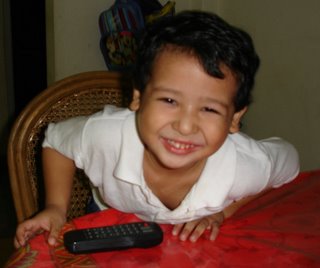
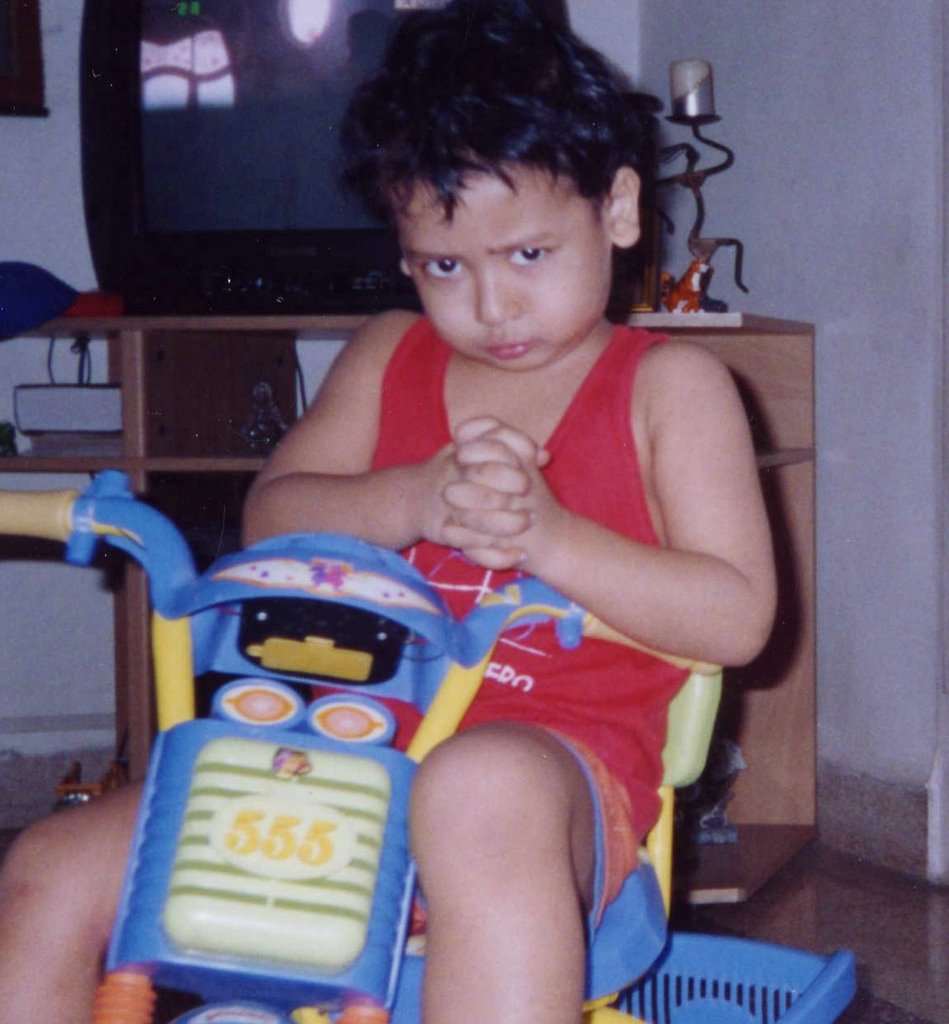
Raag - A Wonderful Boy
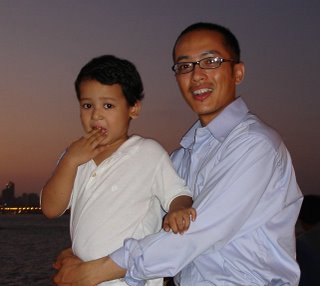
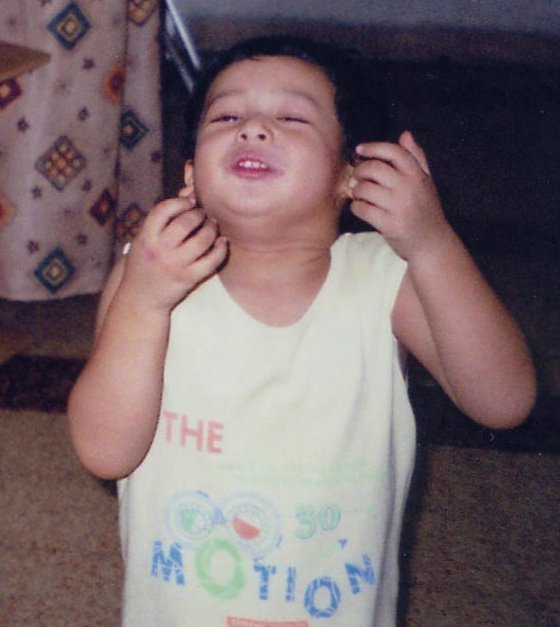
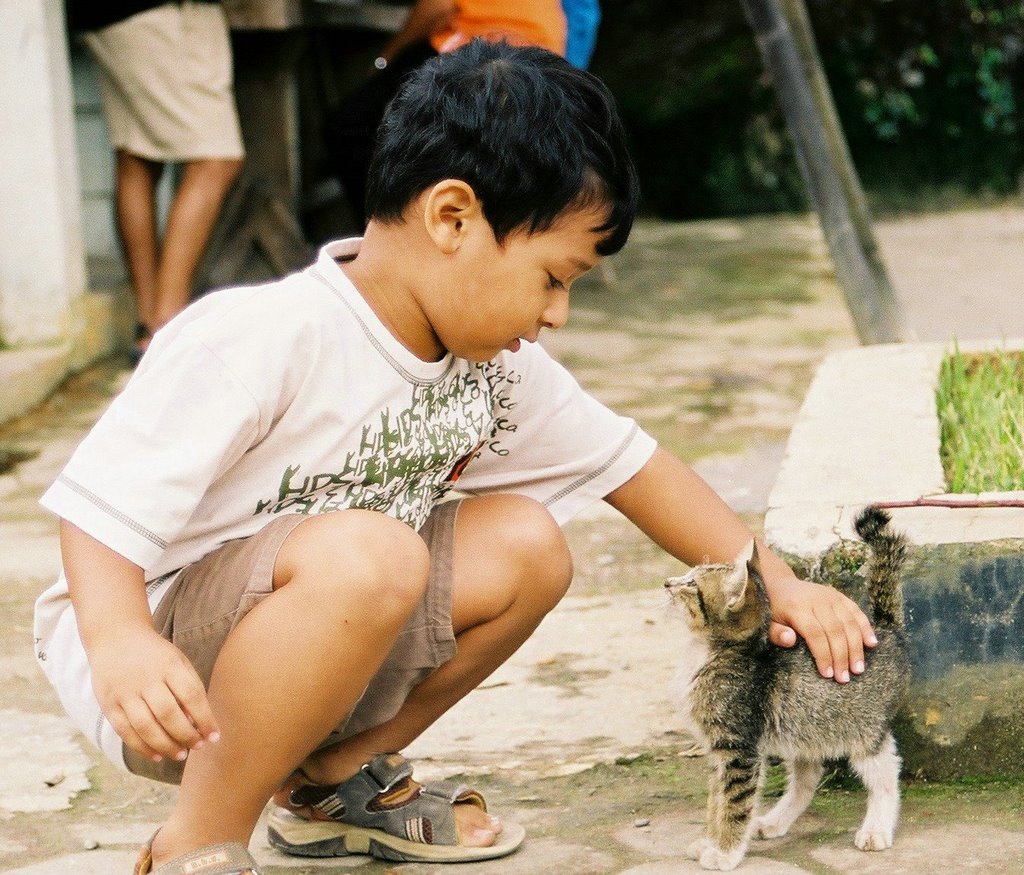
Raag was a year old when we met in 2003. It was a humid June evening and his dad, Jishnu was carrying him. His mom, Aradhana was nearby and introduced Raag to me in a language only a mother and her one year old child can understand. After a few visits Raag became more friendly and has started calling me Aiban 'dada' (meaning elder brother in Assamese). Raag and his parents lived in Churchgate, Bombay (Mumbai) and our friendship grew through the two years I was there. Jishnu is an Assamese from Shillong and Aradhana hails from Guwahati, and they became my local guardians in Bombay.
Raag and I regard each other well, and we used to communicate with each other in many varied ways, ranging from facial expressions (including making faces) to verbal monosyllables and everything in between. He is one of those very smart and very cute things who knew well beyond their biological age. Raag loves music, singing and dancing and hence he was appropriately named. On many occasions I would take Raag for a walk along Marine Drive and he loved to run. Few times he has suddenly halted from his run when he hears some loud music from some fancy car that zooms pass, and he would raise both arms skywards and shake his bumbum in the most adorable fashion. At home he loved to play 'Achikima' - a game in which I would have to shout 'Achikima' and run towards him, and Raag in turn would also shout 'Achikima' and run ahead of me. I really enjoyed playing 'Achikima' with Raag. He would sing few lines of 'Abhija...abhija', a song from some Bollywood movie which was quite popular then.

When Raag turned 2 years in 2004, he already could recite numbers and alphabets, sing some nursery rhymes and could identify objects by their names. All this having learnt at home, he was over qualified for a pre-school (which in Bombay was a mandatory step towards entering school). Another area he was particularly good at was flirting with girls of all ages. I have seen little girls drool and aunties swoon at the touch of his charm. He used his baby fat and his 'damn-I'm-so-cute' smile to make them flip.
One particular occasion that will always be in my memory is the New Year's eve of 31st December 2003, a night that was Raag's. After having dinner with Raag and his parents, we all went to Marine Drive to s
pend the rest of the hours that remained on the 31st of December of 2003. We were walking along Marine Drive and there was a sea of people, men, women, children of all ages, waiting for the big celebration to welcome the new year of 2004. Raag was as usual running ahead of us, but he suddenly stopped and turned to his right. He has spotted a pretty young thing in red skirt standing next to her dad. He walked purposefuly towards her direction and when he was sure that she noticed him, he stopped, flashed his charming smile and looked at her admiringly. The amused girl smiled back and that was when he inched closer and kissed her on the lips! Having done that, he looked at her again and she was still smiling. Then suddenly Raag smiled and turned and started running again. The little girl meanwhile started crying and had to be consoled by her dad who lifted her up and hugged her. He already broke a very young heart.
Raag is now in Jakarta as his dad got a new appointment in his company which required him to shift base from Bombay to Jakarat. The family shifted last year in August. I called Jishnu 2 days ago and got to speak to Raag after almost a years' gap. He still reme
mbers me and said 'Hello Aiban dada'. Aradhana tells me that Raag's baby fat is disappearing as he is growing. I missed him and everytime I remember him, I recall those moments when we would run along Marine Drive and eat ice cream at Naturals (a famous ice cream joint in Bombay). I remember the times he would cry when I leave and how Jishnu or Aradhana would console him. I remember fondly those times we watched Cartoon channel together and share a good laugh. Raag is a specal friend and I wonder when I meet him again, whether I will be able to lift him and carry him as he runs to me, or will he hug me tight as he used to? Whenever I tell people about Raag I shamelessy brag about him and I know that when I see him again I shall indeed be very happy and I hope he would feel the same way too.
The painful moment I vividly remember is the evening I had to leave after having spent almost the entire day with Raag and his parents. He cried so bitterly as he saw he waved and walked away. I love kids and Raag is a special friend I will always have and adore. His antics and energy, his homour and affection and the special bonding we share I will treasure for always.
Friday, August 04, 2006
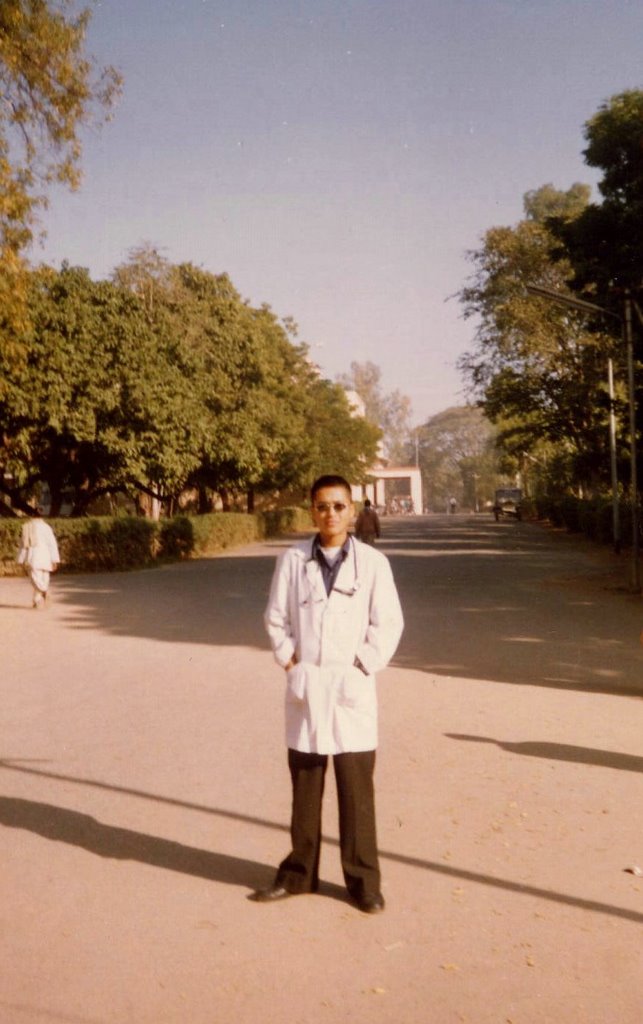
Dr. G Rajan Babu - My Mentor, My Friend
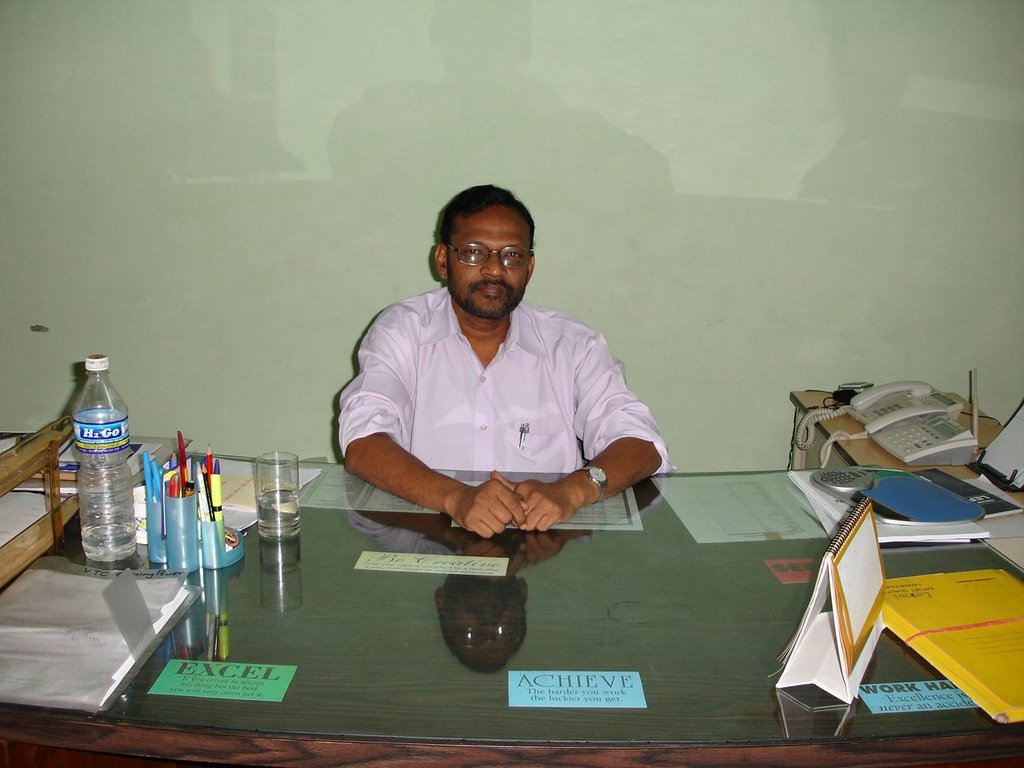
Dr. Rajan's room was compact and partitioned into 2 compartments. In one of the compartments, sits his Secretary, a jovi
al ever smiling man whom Dr. Rajan referred to as Babu. Dr. Rajan seemed pleased to see me and after a bit of informal chat, he briefed me about the assignment that I was required to do. I was to conduct a study (cohort study) to determine the "Defaulting from long term treatment for Leprosy, Hypertension, Tuberculosis and Vitiligo", using secondary data from TLM’s Hospital at Naini, Uttar Pradesh. Dr. Rajan is the Head of the Evaluation Cell of TLM-India and also holds the Deputy Director post in the organization.
My impression of Dr. Rajan was that he was quick to smile whether he is correcting or agreeing. A special quality he possess is the art of being humble but firm. To have an interaction with him is a pleasant as well as a learning experience for me. Given the fact that Dr. Rajan [MBBS, Msc-Epidemiology (London)] has served with TLM for more than 20 years, his experience and knowledge about leprosy and its management is vast and significant.
I completed the study and he was happy with the report. I left Delhi in June and went home to conduct another study into the problem of rickets in Meghalaya. Little did I imagine I would be coming back to TLM to work in the organization. It was in the month of December in 2004, that I got a phone call from TLM Delhi. The Placement Process for our batch (MHA-2003-05) was just being organised at TISS (www.tiss.edu) and I already got a job offer.
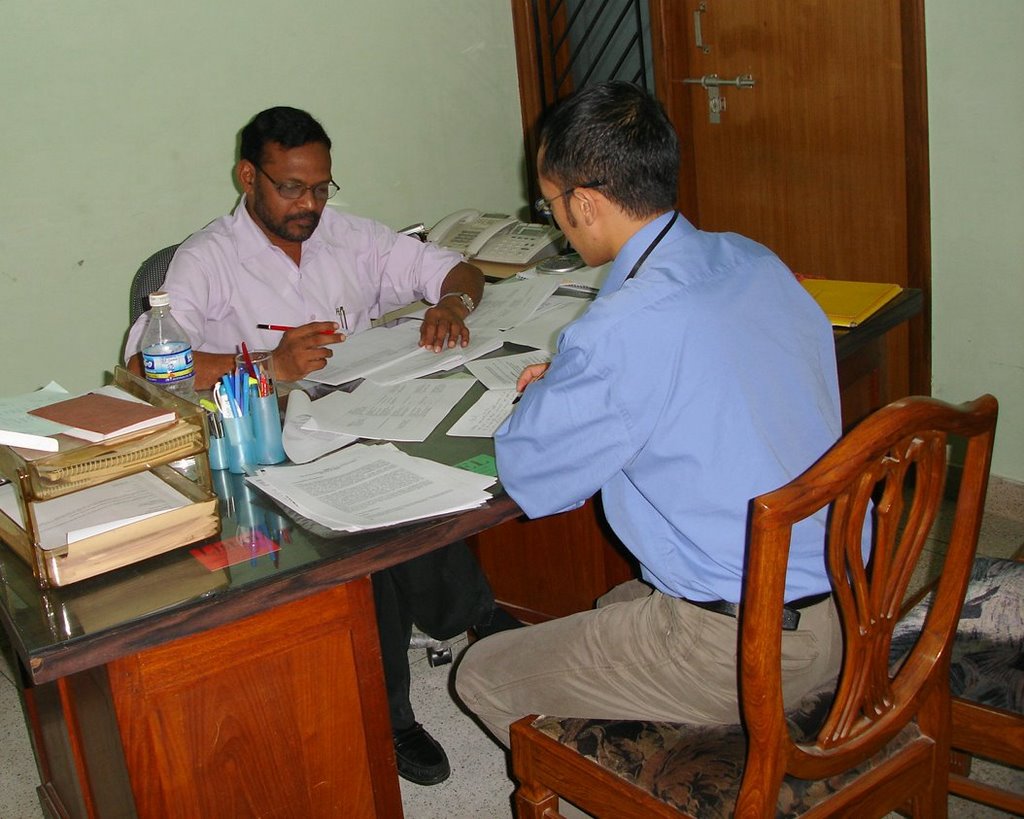
The date was 20th May 2005. It was my official joining date at TLM as Medical Officer - Evaluation. My Boss is of course Dr. Rajan. By then the Evaluation Cell office had been shifted to a new address, C-85, Inderpuri, and is more spacious with a quieter working environment. Its been a year and 2 months working with Dr. Rajan and I admire him greatly for his professional guidance and personal charisma. I must confess, had Dr. Rajan beco
me a diplomat, he would have been a very respected one indeed. He also has the gentle ability to resolve a conflict. He is direct and appreciative, soft but convincing. Having a Boss like him is such a blessing I must admit.
He gives me the space and the opportunity to work. I seriously believe that he is one man with so many friends and so few opponents. Surely, he must be held in high regard in the 'Favour Bank' that Paulo Coelho writes about in his book "Zahir".
Dr. Rajan may look serious, but should you hear him share a joke and burst into laughter, you will know this man has his humour uniform under his office dress at all times. Despite his hectic schedule of coordinating the work of ILEP (www.ilep.org.uk) in India, there has never been a time that he does not listen and share his inputs on any work I have. He is always quick to listen and provides sound advice. He has this interesting habit of making a 'checklist', which sooner than later I found to be very important indeed. Monitoring and evaluation requires among many other things, a good reference to the correct information and procedures that a simple checklist can provide in the hour of need. He has taught me to value the small things and for that I am grateful. There is only one thing I would like him to stop, and it is smoking. Many a times, I would see him steal a puff outside the office near some corner and I swear he looked like a famous South Indian actor in a villian role.
I regard him as my mentor but he is also a dear friend who understands and listens. I will always have fond memories and deep respect for this honourable man.
Saturday, July 29, 2006
Finally we met!
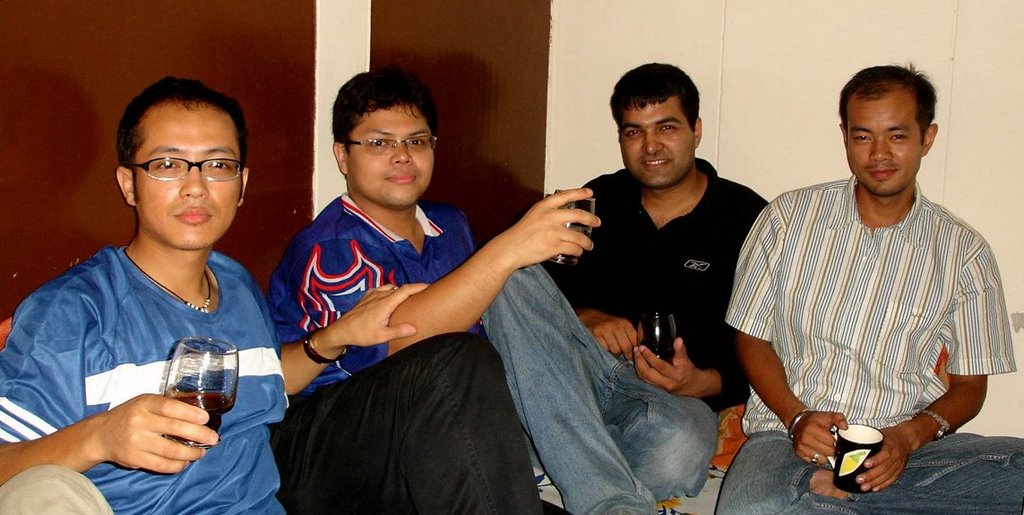
ther…until the end of Pre-University exam (1996) came, and they had to go their separate ways in their quest for higher learning, a journey each knew they had to take one fine day. We met last night at JNU campus. It was a special night for the four of us and even the weather seemed to arrange its elements to make it most enjoyable for us – the night was cool, the rain was drizzling and the air was wrapping us in a welcoming chill.
Sometime in middle of 1996, Basil went south to Pondicherry to join JIPMER (
As we hugged and greeted each other with so many words and gestures, it was hard to contain the excitement. At that moment we all wished another person was with us. He is Bibek Yumnam, the best artist we have known at school. He is based at Dehra Dun at the Wildlife Institute of India (http://www.wii.gov.in/). We drove to Aditya's hostel and Vikram was kind enough to have bought a bottle of wine to celebrate the occasion. As we settled ourselves comfortably in Aditya's room, I persuaded Basil to narrate to all present some of his amazing 'ward stories'. Basil was meeting Vikram and Aditya for the first time after more than 10 years. Vikram and I met about 3 weeks ago in JNU along with Aditya, and that day we had visited a very dear teacher of ours, Mrs. Gopalakrishna, our favourite Biology teacher in school, who has now just settled in the capital.
So Basil, the great gynaecologist that he is, started telling us his ward stories, one at a time, and with a purposive pace, as we hung on to his every word. As you can see, his stories were truly awe inspiring for Vikram and Aditya. They didn't miss a word, and at times when the terminology in the stories became too 'medical' for them, Basil and I would explain the meaning in, as they say, 'layman's speech'. 

So the night went along fine with great stories and wine. For those who are curious or interested to know about the 'ward stories', please catch hold of Basil and ask him. He is usually spotted in the labour room and OT (Operation Theatre) of AIIMS, though he also frequents Nescafe shop near AIIMS Hostel No. 7.
We ended up talking about good old school days, our teachers, our buddies in class and the moments we cherished the most. Then I started telling them about my first experience in the Dissection Hall (DH) of RNTMC, and how it felt like to see a cadaver on the dissection table. Aditya and Vikram, though interested they were in listening to our medical tales, were not quite certain about continuing to hear more about cadavers and dissections. I smile as I remember Aditya's facial expression when Basil and I told him about DH stories...poor chap. I wonder if he slept that night....
Anyway, Aditya was finally a very relieved man when the subject of discussion changed. We started pulling Vikram's legs on some remarks that he made, for Vikram by then, was a very 'high' man indeed, thanks to the drinks. Basil and I finally left JNU at 1:00 am.
We promised ourselves we will meet again on a weekend. It was a meeting well made. Cheers to us.
Tuesday, July 25, 2006
Udaipur Memories
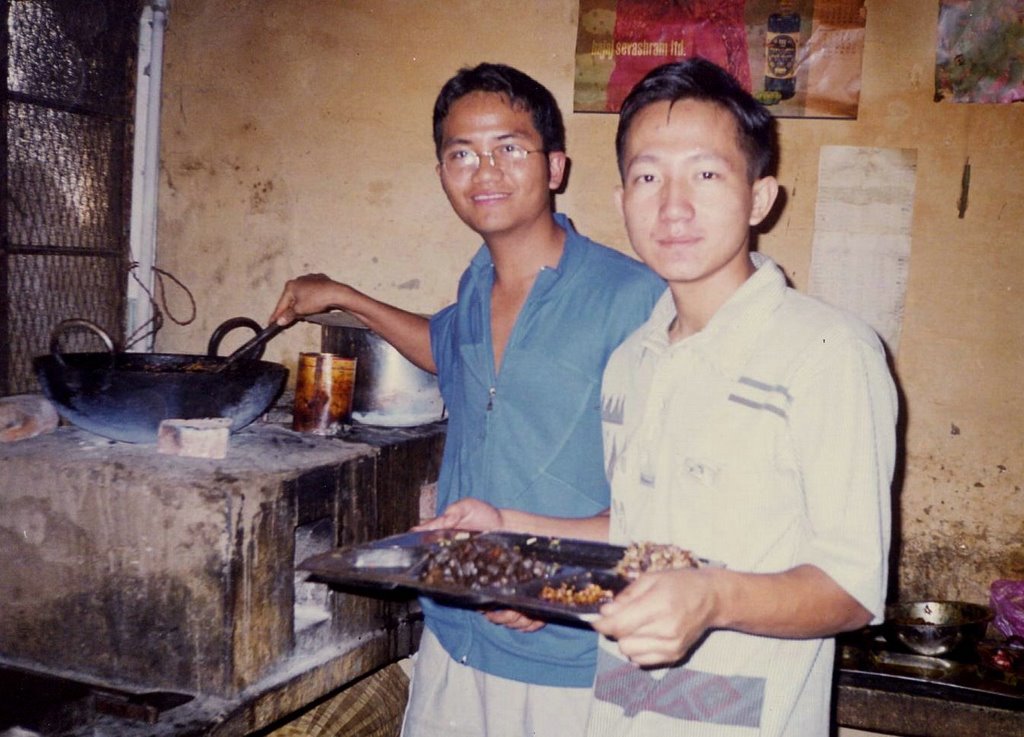
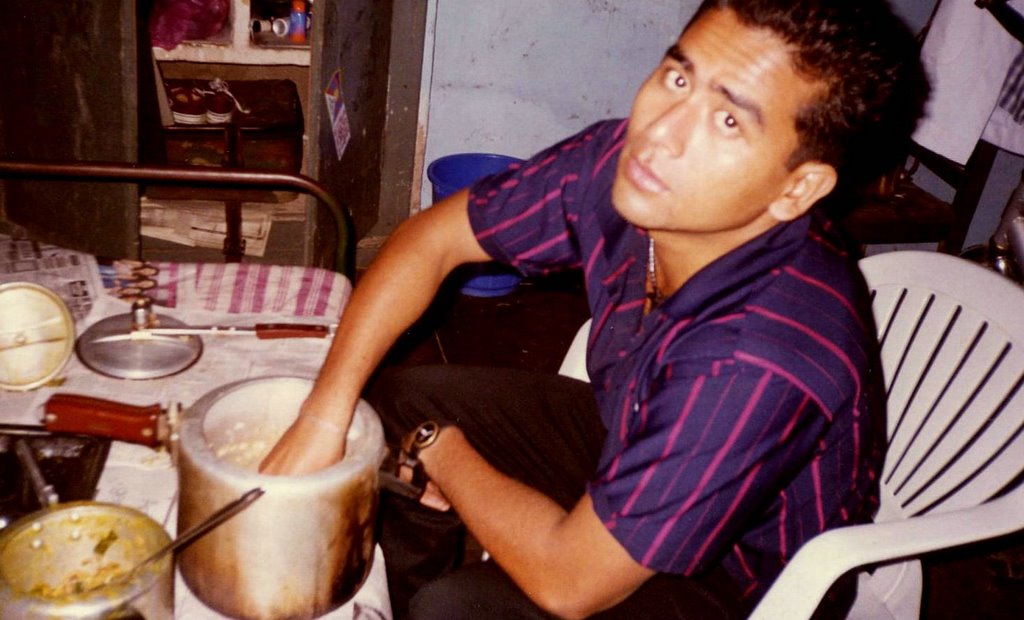
s like 'Bai' (the Mizo vegetable cocktail), 'chicken stew', 'egg curry', etc. Our cook, Hari Singh, picked up the cooking style that suited our taste buds very well. We would shower our appreciation on him and many of us also presented him with many gifts. After a few months of starting our own Mess, many of our batchmates started joining us as they found the food much to their liking. Jason was one year our senior at RNTMC. It was rumoured in many corridors and gatherings that he could eat 1 kg of rice and 1 kg of meat alone. We found it hard to believe, until one day this picture that was taken by an unknown source, proved it to be true indeed.
Jason is a good friend currently working with the Meghalaya State Government in the Garo Hills.
On many occasions we would go for a group picnic to one of the many scenic locations in and around Udaipur. Udaipur being bordered by the Arravali ranges has some of the most beautiful lakes in Rajasthan. Franklin was known more for his exploits in Yercaud than in Aizawl. For he was one who saw most of his growing up years at Monfort School, Yercaud. He would narrate with a passionate flair about his days at Monfort, and since he was good in telling stories, he always found a quick audience to listen to his tales.
Duhawma was always the energetic dancer at parties. I also call him 'Mercury boy' for this man was a Freddy Mercury fan. He had almost the entire collection of QUEEN and sang a new Queen song each day.
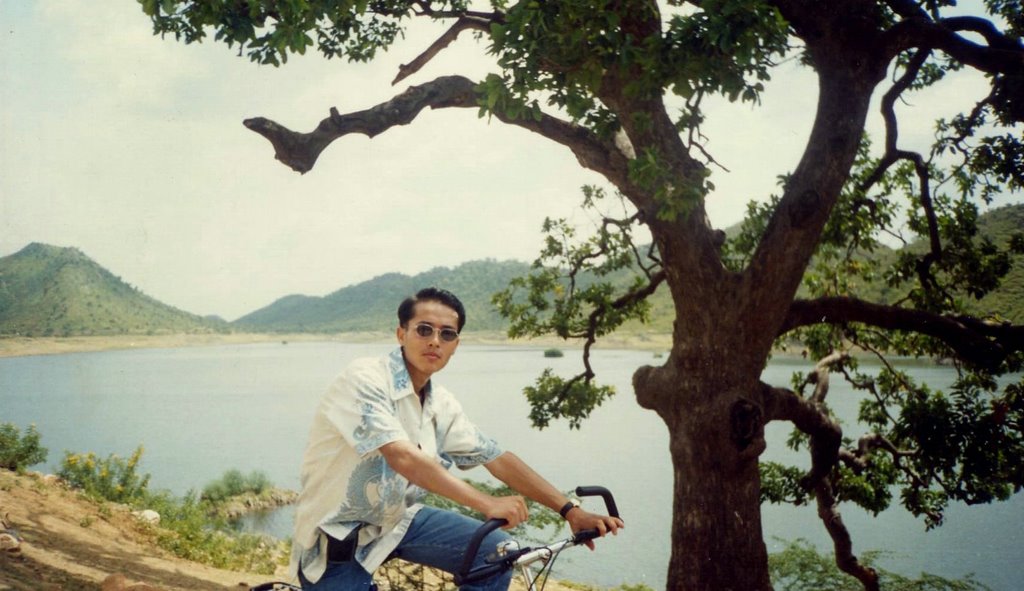
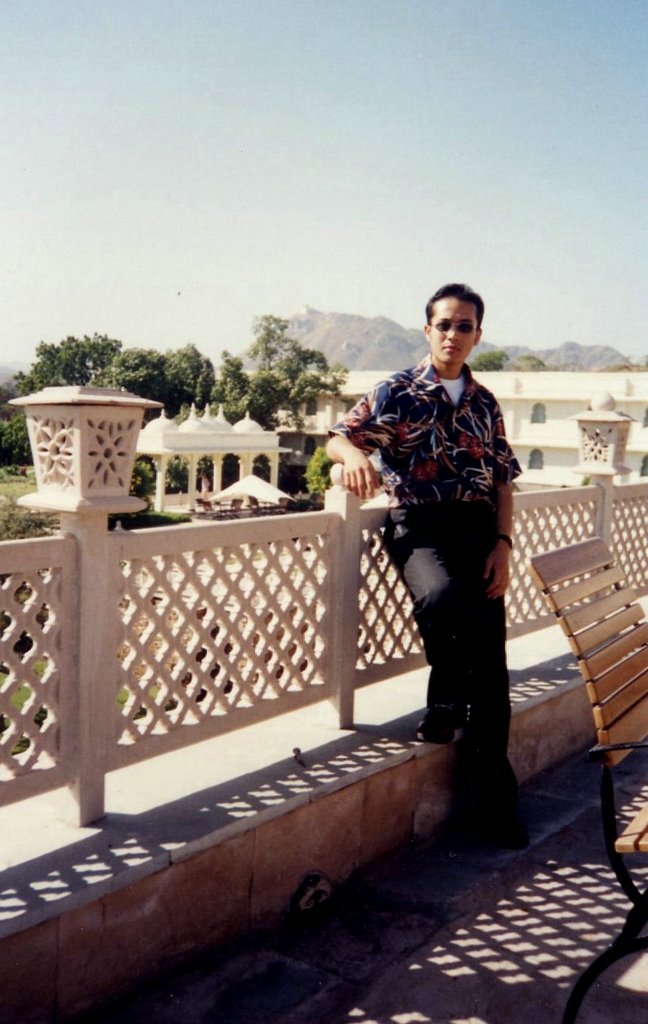
In 1997 the Trident Oberoi hotel was opened for business in Udaipur, and fortunately for me, having close friends working in the hotel meant easy access to the hotel and its surroundings, including discounts at the restaurants. Behind me one can see the Monsoon Palace (barely visible here) that sits proudly on top of the mountain in the background. Oberoi now has another 5 star hotel called the Udaivillas running in Udaipur. It is located in the same area not too far from the Trident, but closer to the Pichola lake.Tuesday, July 11, 2006
How do I love Thee?
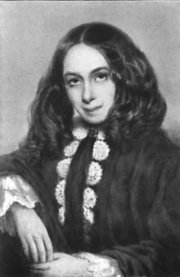
I felt the poem radiates with the intense love Elizabaeth had for her husband. The choice of words she used spoke of her character and the values she believed in. If any lover were to present his or her beloved a gift, it should be this poem.
How do I love thee? Let me count the ways.
I love thee to the depth and breadth and height
My soul can reach, when feeling out of sight
For the ends of Being and ideal Grace.
Most quiet need, by sun and candlelight.
I love thee freely, as men strive for Right;
I love thee purely, as they turn from Praise.
In my old griefs, and with my childhood's faith.
With my lost saints,—I love thee with the breath,
Smiles, tears, of all my life!—and, if God choose,
I shall but love thee better after death.
Thursday, July 06, 2006
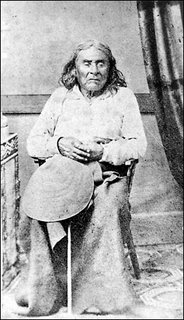
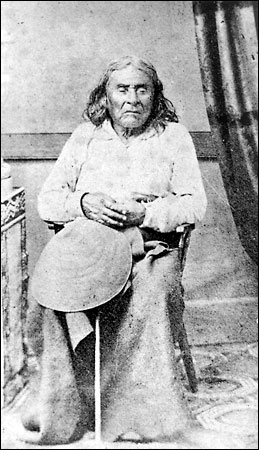
Chief Seattle
Chief Seattle (1786 – 1866) was a leader of the Suquamish and Duwamish Native American tribes in what is now the state of Washington in the United States of America. He was a prominent figure among his people and pursued a path of accommodation to white settlers, and formed a personal relationship with doctor David Swinson "Doc" Maynard, an advocate of Native America rights. It was at Maynard's suggestion that Seattle, Washington was named after the Chief.
In 1851, Chief Seattle and other Native Indian tribes around Washington's Puget Sound, delivered what is considered to be one of the most beautiful and profound environmental statements ever made. Chief Seattle's speech was in response to a proposed treaty under which the Indians were persuaded to sell two million acres of land for $150,000."
The Speech:
How can you buy or sell the sky, the warmth of land? The idea is strange to us. If we do not own the freshness of the air and the sparkle of water how can you buy them? Every part of this earth is sacred to my people. Every shining pine needle, every sandy shore, every mist in the dark woods, every clearing and humming insect is holy in the memory and experience of my people. The sap, which courses through the trees, carries the memories of the red man.
The white man’s dead forget the country of their birth when they go to walk among the stars. Our dead never forget this beautiful earth, for it is the mother of the red man. We are part of the earth and it is part of us. The perfumed flowers are our sisters; the deer, the horse, the great eagle, these are our brothers. The rocky crests, the juices in the meadows, the body heat of the pony, and man – all belong to the same family.
So, when the Great Chief in Washington sends word that he wishes to buy our land, he asks much of us. The Great Chief sends word he will reserve us a place so that we can live comfortably to ourselves. He will be our father and we will be his children. So we will consider your offer to buy our land. But it will not be easy. For this land is sacred to us.
The shining water that move in the streams and rivers is not just water but the blood of our ancestors. If we sell you land, you must remember that it is sacred, and you must teach your children that it is sacred and that each ghostly reflection in the clear water of the lakes talks of events and memories in the life of my people. the water’s murmur is the voice of my father’s father.
The rivers are our brothers, they quench our thirst. The rivers carry our canoes, and feed our children. If we sell you our land, you must remember and teach your children that the rivers are our brothers and yours; and you must henceforth give the rivers the kindness you would give any brother.
We know that the white man does not understand our ways. One portion of the land is the same to him as the next, for he is a stranger who comes in the night and takes from the land whatever he needs. The earth is not his brother, but his enemy, and when he has conquered it he moves on. He leaves his father’s graves behind, and does not care. He kidnaps the earth from his children and he does not care. His father’s grave and his children’s birthright are forgotten. He treats his mother, the earth, and his brother, the sky, as things to be bought, plundered, sold like sheep or bright beads. His appetite will devour the earth and leave behind only a desert.
I do not know. Our ways are different from your ways. The sight of your cities pains the eyes of the red man. But perhaps it is because the red man is a savage and does not understand.
There is no quiet place in the white man’s cities. No place to hear the unfurling of leaves in spring, or the rustle of an insect’s wings. But perhaps it is because I am a savage and do not understand. The clatter only seems to insult our ears. And what is there to life if a man cannot hear the lonely cry of the whippoorwill or the arguments of the frogs around a pond at night? I am a red man and do not understand. The Indian prefers the soft sound of the wind darting over the face of a pond, and the smell of the wind itself cleansed by a mid-day rain or scented with the pinion pine.
The air is precious to the red man, for all things share the same breath –the beasts, the trees, the man; they all share the same breath. The white man does not seem to notice the air he breathes. Like a man dying for many days, he is numb to the stench. But if we sell you our land, you must remember that the air is precious to us, that the air shares its spirit with all the life it supports. The wind that gave our grandfather his first breath also receives his last sigh. And if we sell you our land, you must keep it apart and sacred, as a place where even the white man can go to taste the wind that is sweetened by the meadow’s flowers.
So we will consider your offer to buy our land. If we decide to accept, I will make one condition; the white man must treat the beasts of this land as his brothers. What is man without beasts? If all the beasts were gone, man would die from a great loneliness of spirit. For whatever happens to the beasts, soon happens to men. All things are connected.
You must teach your children that the ground beneath their feet is the ashes of our grandfather’s so that they will respect the land. Tell your children that the earth is rich with the lives of our kin. Teach your children what we have taught our children that the earth is our mother. Whatever befalls the earth befalls the sons of the earth. If men spit upon the ground, they spit upon themselves.
This we know; the earth does not belong to man; man belongs to the earth. This we know; all things are connected like the blood that unites one family. All things are connected; whatever befalls the earth befalls the sons of the earth. Man did not weave the web of life; he is merely a strand in it. Whatever he does to the web, he does to himself.
Even the white man, whose God walks and talks with him as friend to friend, cannot be exempt from the common destiny…We may be brothers after all. We shall see. One thing we know, which the white man may one day discovers – Our God is the same God. You may think now that you own him as you wish to own our land; but you cannot. He is the God of man, and His compassion is equal for the red and the white. This earth is precious to Him, and to harm the earth is to heap contempt on its creator. The white too shall pass; perhaps sooner than all other tribes. Contaminate your bed, and you will one night suffocate in your own waste.
But in your perishing you will shine brightly, fired by the strength of the God who brought you to this land and for some special purpose gave you dominion over the land and over the red man. That destiny is a mystery to us, for we do not understand. When the buffaloes are all slaughtered, the wild horses tamed, the secret corners of the forests heavy with the scent of many men and the view of the ripe hills blotted by talking vines…Where is the thicket? Gone! Where is the eagle? Gone! The end of living and the beginning of survival.
------------------------
A brief account of Chief Seattle's life:
The Chief Seattle was born around 1786 on Blake Island, Washington, and died in June 7, 1866, on the Suquamish reservation at Port Madison, Washington. His father, Schweabe, was a leader of the Suquamish tribe, and his mother was Scholitza of the Duwamish tribe.
Seattle earned his reputation at a young age as a leader and a warrior. He was very tall for a Puget Sound native at nearly six feet. He was also known as an orator, and his voice is said to have carried half a mile or more when he addressed an audience. He married well, taking wives from the village of Tola'ltu just southeast of Duwamish Head on Elliot Bay (now part of West Seattle). His first wife died after bearing a daughter. A second wife bore him sons and daughters. The most famous of his children was Princess Angeline. After the death of one of his sons, he sought and received baptism in the Roman Catholic Church, probably in 1848 near Olympia, Washington. His children were also baptized and raised in the faith, and his conversion marked his emergence as a leader seeking cooperation with incoming American settlers.
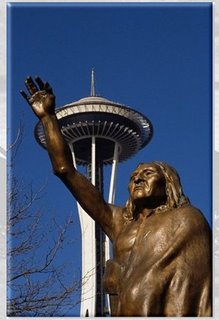
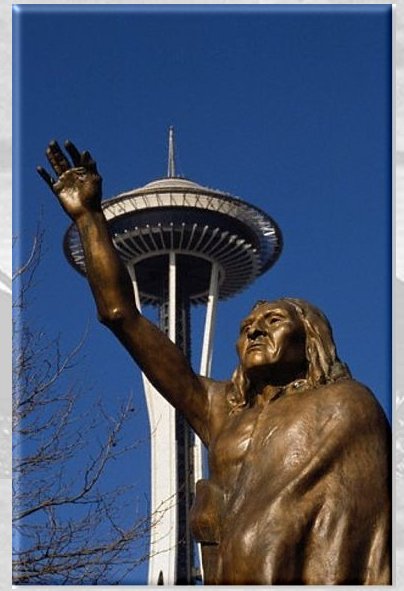
In 1912, a local sculptor, James Wehn created the statue of Chief Seattle. Myrtle Loughery, the chief’s great great grand-daughter unveiled it on Founders Day, November 13 1912. It was renovated in 1975, and today the statue presides over Tilikum Place, near the Seattle Centre. (In the background is the Seattle Center Space Needle)
"Man did not weave the web of life - he is merely a strand in it.Whatever he does to the web, he does to himself."
Chief Seattle, 1854
Wednesday, July 05, 2006
Sohra
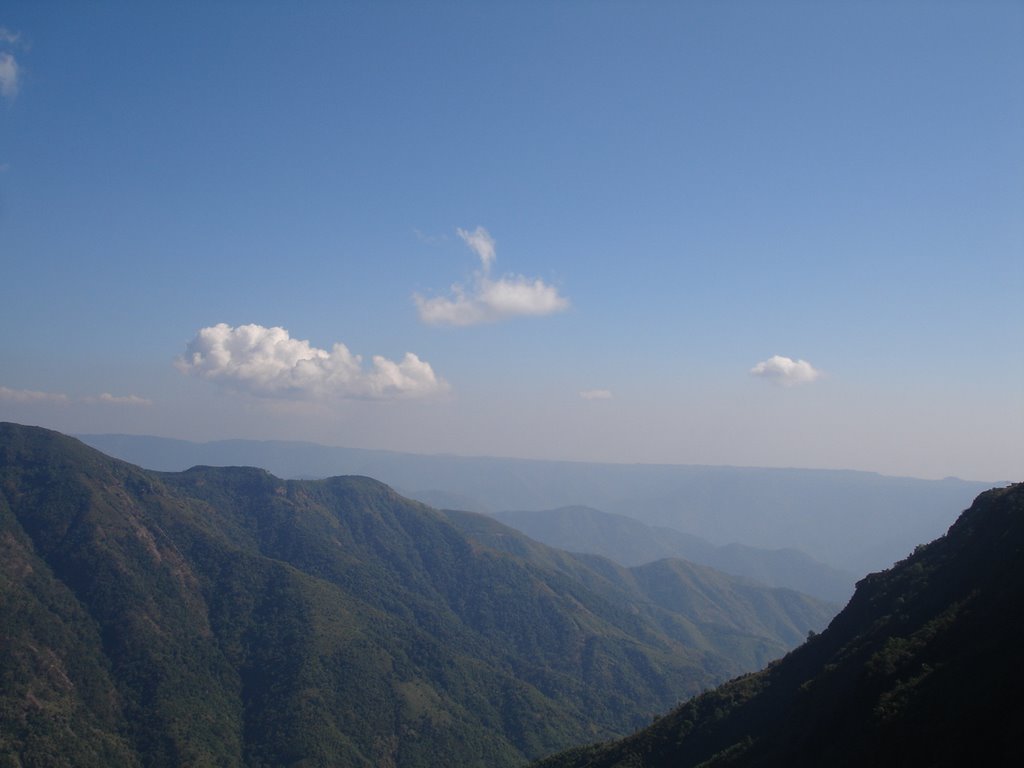
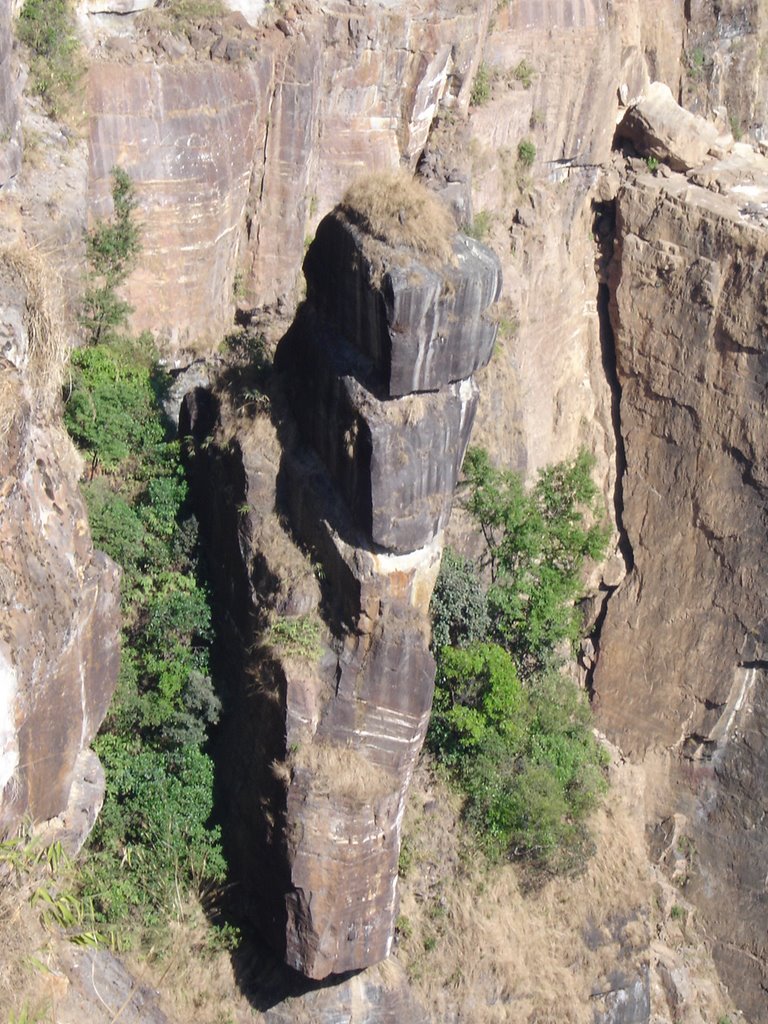
When I was young, every visit to Sohra was filled with a mixed of excitement and awe. While still on the way, I would visualize those massive green mountains rising from the deep valleys to flirt with the clouds. The land is characterized by sheer beauty and ruggedness that leave many a traveler awestruck and breathless.Sohra also known as Cherrapunjee is one of the world's wettest places where the average yearly rainfall of 450 inches (1143 cms). Mawsynram, a village about 30 kms west of Sohra, has recently earned the title of the world's wettest spot with an average annual rainfall of 467 inches (1186 cms). For those who are interested, Mt. Waialeale on the island of Kauai in Hawaii ia also among the top wettest places in the world with 460 inches (1168 cms) of rain per year. The rainfall on Mt. Waialeale is spread over 12 months, while Sohra gets almost all of its rain in the six monsoon months of April through September.
The terrain rises steeply from the India-Bangladesh border to Sohra, which sits at an elevation of 4,500 feet (1372 m). After passing over the Bangladesh Plains, the monsoon clouds hit Sohra with a vengeance. A world record 1,042 inches (2647 cm) of rain fell between August 1860 and July 1861. More recently, the year 1974 saw 967 inches of rain with an astounding 323 inches in just the month of July. That's 10 inches (25 cm) a day for an entire month! There is only one kind of downpour that comes to mind, the one that came when Noah's Ark was completed. On June 16, 1995, a record 62 inches of rain fell in just 24 hours.
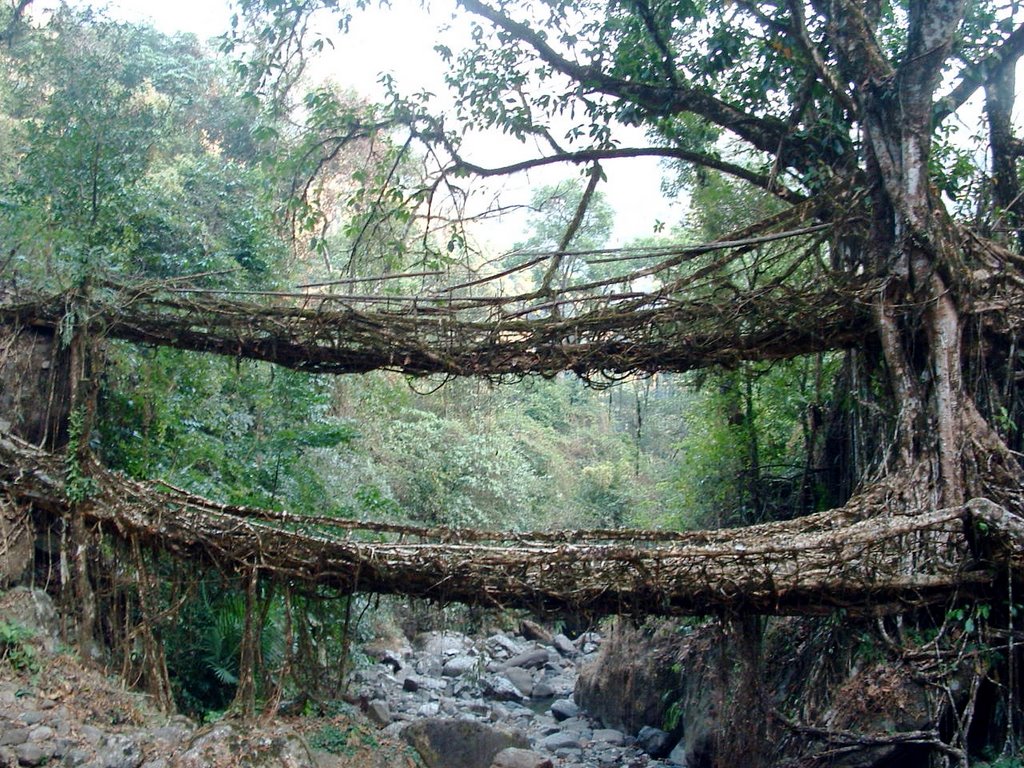
I took a trek with my friends to the 'living root bridge', the much talked about spectacle, in December 2005. There are in fact quite a number of these root bridges that have formed along the supports constructed by the villagers over streams and rivers so that people can cross from one side to the other. The roots of the trees, which have gr
own above the ground would grow, entertwine and spread along the supports and ultimately form a living root bridge. The village we trekked to was Nongriat about 20 kms from Sohra. It took more than 2 hours to trek to the doubled storeyed living root bridge, and along the way, we crossed few root bridges and also one made of steel wires that was constructed by the government. The journey was very tiring indeed and every sinew in my body ached as we navigated through the rough unsuspecting terrain. But the sight that greeted us was worth those drops of prespiration that rained on the ground along the way. It was unimaginable that local knowledge and wisdom could make use of trees in this manner. It almost looked like a scene out of a 'Tarzon' comic. We stopped, absorbed the wonder, then clicked pictures by the dozens...until we heard one of our trekmates' call from the village ahead becknoning us to taste the locally made fruit juice which he was sipping from a mug. Then we all ran and ambushed him.
To discover Meghalaya and the rest of the North East India please do visits my friend James Perry's site below.
Saturday, June 17, 2006
Darts
So I went to google.com the next day and found some interesting facts about the game darts. Darts is a game, or rather a variety of related games, in which darts are thrown at a circular target (dart board) hung on a wall. Though various different boards and games have been used in the past, the term 'darts' usually now refers to a standardized game involving a specific board design and set of rules.
As well as being a professional competitive sport, darts is a traditional pub game, commonly played in the United Kingdom (the first to officially recognize darts as a sport), the Netherlands, Israel, the Scandinavian countries, the United States and elsewhere.
Dart boards are usually made of sisal fibers and each section is lined with thin metal wire. The numbers indicating the various scoring sections of the board are normally made of wire, especially on tournament-quality boards, but may be printed directly on the board instead.
Height and distance:
In the standard game, the dart board is hung so that the bullseye is 5 ft 8 in (1.73 m) from the floor, eye-level for a six foot man. The oche (pronounced 'ock-ey'), or throwing line behind which the player must stand, is 7 ft 9.25 in (2.37 m) from the face of the board, though a few British pubs set it at 8 ft (2.44 m) or 8 ft 6 in (2.59 m).
The dartboard itself may have its origins in the cross section of a tree, although some historical records suggest that the first standard dartboards were the bottoms of wine casks, hence the game's original name of "butts" (Aha…this is interesting). There is speculation that the game originated among soldiers throwing short arrows at the bottom of the cast or at the bottom of trunks of trees. As the wood dried, cracks would develop, creating "sections". Soon, regional standards emerged and many woodworkers supplemented bar tabs by fabricating dart boards for the local pubs.
The numbering plan known by many today has a 20 on top; however, a great many other configurations have been used throughout the years and in different geographical locations. By most accounts, the numbering layout was devised by Brian Gamlin in 1896 to penalize inaccuracy. Although this applies to most of the board, the left-hand side (near the 14 section) is preferred by beginners, for its concentration of larger numbers.
a. Hitting one of the large portions of each of the numbered sections, traditionally coloured black and yellow, scores precisely the points value of that section.
b. Hitting the thin outer portions of these sections, coloured red and green, scores double the points value of that section.
c. Hitting the thin inner portions of these sections, roughly halfway between the outer wire and the central circle and again coloured red or green, scores triple (or 3x) the points value of that section.
d. The central circle is divided into a green outer ring worth 25 points (known as "outer" or "outer bull") and a red inner circle (usually known as "bull", "inner bull" or "double bull"), worth 50 points. The term "bullseye" can mean either the whole central part of the board or just the inner red section.
e. Hitting outside the outer wire scores nothing.
f. Any dart that does not remain in the board after throwing (for example, a dart that hits a wire and bounces out of the board or drops out with the impact of a later throw) also scores nothing. Variations on this rule exist - some judge that a dart which obviously hits a scoring section but then subsequently drops out will count if caught before it hits the floor or if it rebounds behind the throwing line before touching the ground it may be thrown again. In professional rules, a dart's tip must be touching a scoring section for the dart to count.
g. The highest score possible with 3 darts is 180, obtained when all three darts land in the triple 20. In the televised game, the commentator frequently announces a score of 180 in exuberant style.
A game, or "leg", of darts is usually contested between two players who take turns in throwing up to three darts. Starting from a set score, usually 501 or 301, a player wins by reducing his score to zero. The last dart in the leg must hit either a double or the inner portion of the bullseye, which is the double of the outer bull, and must reduce the score to exactly zero. Successfully doing so is known as "doubling out" or "checking out". A throw that would reduce a player's score to one or below zero does not count, his turn ends, and his score is reset to what it was before that turn. Since the double areas are small, doubling out is usually the most difficult and tense part of a leg. Longer matches are often divided into sets, each comprising some number of legs.
Of the two professional organisations, the British Darts Organisation (BDO), founded 1973, is the older. Its tournaments are often shown on the BBC in the UK. The BDO is a member of the World Darts Federation (WDF) (founded 1976), along with organisations in some 60 other countries worldwide. The BDO organises all British darts players, with the exception of a small group of professionals.
In 1994 a breakaway organisation was formed, initially known as the World Darts Council (WDC) but shortly after known as the Professional Darts Corporation (PDC). Over the years a continued exodus of top players from the BDO has established the PDC as the home of Professional Darts. An influx of sponsors and rapid expansion of television coverage continues. Tournaments are broadcast in the UK on Sky Television, and in the Netherlands by Sport One with many other tv stations now involved across the globe.
The PDC tournaments often have higher prize money and without doubt the best player in the world - 13 times World Champion Phil Taylor. Cementing the PDC's dominance at the very top of the game in early 2006, four times BDO world champion Raymond van Barneveld moved to the PDC.
Professional competitions:
The major tournament within both the PDC and BDO organisations are the World Championships which take place at the start of each year. The BDO tournament has been running since 1978, the PDC tournament since 1994 and in 2006 the first prize offered and total prize fund of the PDC World Championship was double that offered by the BDO tournament. (£100,000 to the PDC Champion, £50,000 to the BDO Champion).
The other main professional tournaments are ; Darts Premier League, UK Open, Las Vegas Desert Classic, World Matchplay, World Grand Prix (PDC - all televised live and in their entirety)
International Darts League, World Darts Trophy, World Masters (BDO/WDF - with the former two only broadcast on Dutch tv (SBS6), and the latter broadcast on SBS6 and by the BBC in the UK)
The WDF World Cup (for national teams) has been played bi-annually since 1977.
Other facts:
(a). The American Darters Association offers league organization for casual singles players throughout the United States (http://www.adadarters.com/)
(b). The American Darts Organization is the world's largest national dart league, facilitating the organization of members' regional divisions, and promoting the sport via pub-based teams and individuals across the country (http://www.adodarts.com/)
(c). World Champion: Raymond van Barneveld Barney - 4 times BDO World Champion